
Reviewed · WILDLIFE
Matura Beach Turtle-Watching Experience
Some wildlife encounters happen after dark. The Matura Beach turtle tour takes you to Trinidad’s eastern coast from March through August to watch giant leatherback turtles come ashore, lay their eggs, and, later in the season, send hatchlings toward the sea. I like the rare access to a protected nesting beach and the fact that local villagers lead the visit. I also like that permits, entrance fees, bottled water, light refreshments, and selected-hotel transport are included. The main point to consider is timing: this is a late-night nature outing, and turtle activity cannot be scheduled like a stage show.
The price is $145 per person, which is a serious spend for about five hours. Still, the small maximum group of 10, local turtle protection team, transport, and seasonal wildlife access give the outing real value. If seeing a nesting leatherback is high on your Trinidad wish list, this is the kind of experience where the memory can justify the cost.
In This Review
- Key points about the Matura turtle tour
- Why leatherback turtles make Matura special
- The evening drive from Port of Spain to Matura
- Meeting the Matura turtle protection team
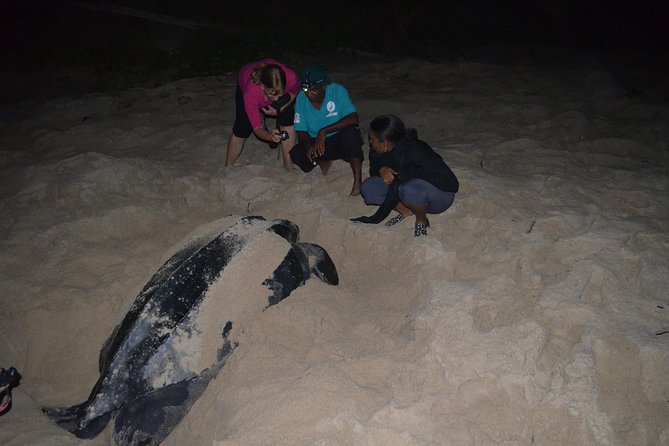
- Watching a leatherback lay her eggs
- Hatchlings from May through August
- What the five-hour schedule feels like
- What is included for $145
- The strengths and limits of a small-group night tour
- Who should book this experience
- Booking, cancellation, and practical planning
- Should you book the Matura Beach turtle tour?
- FAQ
- Where does the turtle-watching experience take place?
- What months does the tour operate?
- When is there a chance to see hatchlings?
- What time does the experience start?
- How long does the experience last?
- Is hotel pickup included?
- How many people can join the tour?
- What is included in the price?
- Can I cancel for a full refund?
Key points about the Matura turtle tour
- Giant leatherbacks at night: Watch turtles that can weigh around 1,500 pounds come ashore to lay eggs.
- March through August season: Nesting takes place during this period, with hatchling sightings more likely from May through August.
- Local protection group: A small group of Matura villagers who patrol the beach guides the visit.
- Round-trip transport: Pickup and drop-off are offered at selected hotels, helping with the late return.
- Small group size: The tour accepts no more than 10 people, a useful limit for a sensitive wildlife encounter.
- About five hours: The evening includes a drive from Port of Spain, time at Matura Beach, and the return journey.
Why leatherback turtles make Matura special
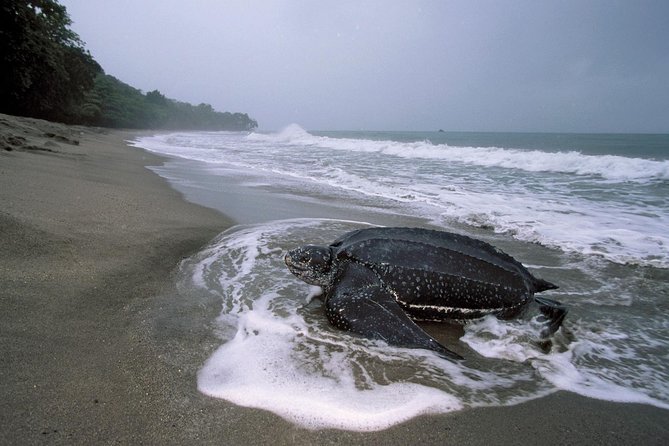
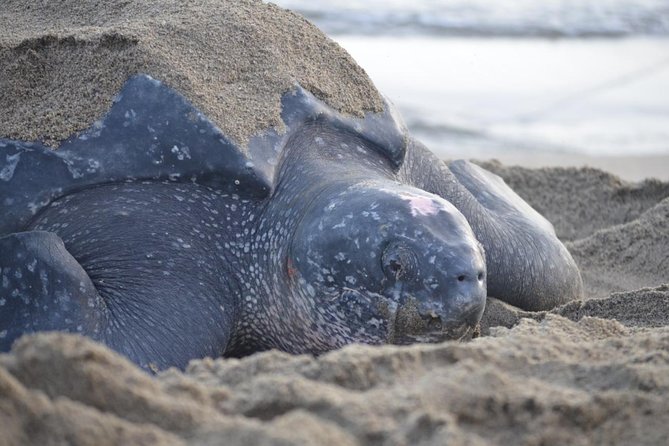
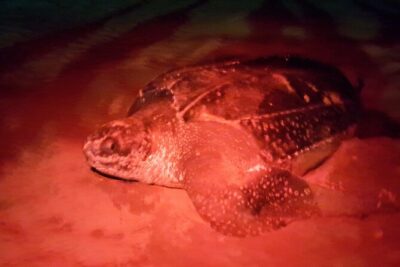
Leatherback turtles are not ordinary sea turtles. They are enormous, ancient animals, with a history reaching back roughly 150 million years and relatively few evolutionary changes over that span. A female can weigh about 1,500 pounds, so seeing one move from the water onto the beach is a powerful sight even before she begins laying eggs.
The turtle’s journey is also part of what makes this visit meaningful. Female leatherbacks swim thousands of miles before returning to nesting beaches. At Matura, you are not simply looking at a large animal in the ocean. You are watching a precise part of its breeding cycle, on a beach where local people work to protect it.
That difference matters. A standard beach stop gives you scenery and sea air. This evening outing gives you a close look at a natural event that takes place only during a limited season and only at night. You need to arrive with patience, though. Nature decides when the turtle appears, how long she stays, and what you see.
The experience is designed to let you observe without disturbing the animals. That is one of its strongest features. The local guides are members of an authorized turtle protection group, and their role is not just to point out turtles. They help manage the visit around a vulnerable nesting process.
More wildlife trips in Trinidad:
- Yerette Home of the Hummingbird
★ 4.5 · 22 reviews - Caroni Swamp wildlife Tour
★ 4.5 · 13 reviews - Yerette Home of the Hummingbird and Caroni Wildlife Tour
★ 3.5 · 3 reviews
The evening drive from Port of Spain to Matura
The tour departs Port of Spain at about 5:30 or 6:00 p.m., depending on the arrangement for your booking. You travel through several villages toward Trinidad’s northeast coast, reaching Matura Beach at about 8:00 p.m.
This drive is part of the evening’s rhythm. You leave the city while there is still some daylight, then arrive at the coast after dark, when leatherbacks normally come ashore. The timing may feel long if you are hoping for instant wildlife action, but the distance is also why hotel pickup is useful.
Selected hotels receive round-trip transport, with a driver and guide handling the journey. That is a practical advantage for a nighttime activity. You do not need to arrange a late taxi from a remote beach, and you can focus on the outing rather than finding your way back after dark.
The pickup detail needs attention at booking. Transport is offered only from selected hotels, while the stated meeting point is Matura Beach. If your accommodation is not included, confirm where you must meet the group before paying. Also confirm the exact departure time, since the information gives both approximately 5:30 p.m. and approximately 6:00 p.m.
The drive and beach visit together take about five hours. The listed beach portion is about two hours, leaving roughly three hours for the outbound and return journey, waiting, and transfers. That makes this a full evening rather than a quick stop.
Meeting the Matura turtle protection team
At Matura Beach, a small group of villagers who patrol the beach during nesting season meets the group. This local connection is central to the experience.
You are not being led onto the beach by a generic sightseeing guide with a memorized speech. You are joining a community effort tied directly to turtle protection. The patrol group knows the beach, the nesting season, and the rules needed to keep the animals safe.
The outing takes place in a group of no more than 10 people. That limit is especially welcome here. A large crowd would make a quiet nighttime wildlife encounter feel noisy and intrusive. A smaller group gives you a better chance to listen to instructions and watch without creating a human traffic jam around a nesting turtle.
The guides lead you along the beach to look for turtles in the moonlight. Since the purpose is responsible observation, you should expect guidance on where to stand and how to behave. The supplied details do not list every beach rule, so listen closely to the local team rather than assuming you can approach, touch, photograph, or use lights as you wish.
This is one of those tours where the guide’s judgment shapes the evening. A turtle may be visible from a distance, partly hidden by darkness, or still making its way up the sand. The best experience comes from treating the beach as a protected nursery, not as a place for a personal close-up.
Watching a leatherback lay her eggs
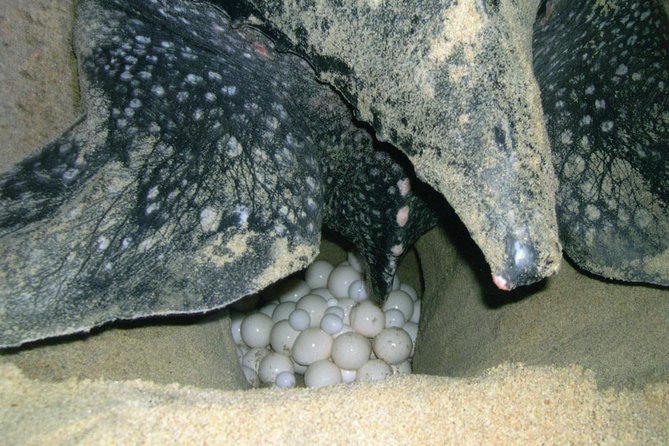
The main event is the nesting process. A female leatherback comes ashore, finds a suitable place, and lays her eggs. The scale of the animal can be startling, but the scene itself is quiet and deliberate.
You might see the turtle emerge from the surf, crawl up the beach, and begin preparing the nest. You might instead arrive after she has started laying. The details provided do not promise a guaranteed sighting, and this is an important part of the value calculation. You pay for organized access during nesting season, not for a guaranteed wildlife performance.
The best praise attached to this experience focuses on the feeling of seeing a huge turtle lay eggs. That reaction makes sense. The event is unusual, direct, and tied to the animal’s survival. It is not a staged encounter, and the turtle does not adjust her behavior for the group.
The moonlight setting adds to the atmosphere, but it also means you should manage expectations about visibility. You will not have the bright, full view associated with a zoo exhibit or daylight beach walk. Darkness is part of the turtle’s natural routine. The guides’ instructions and the group’s patience are more useful than trying to force a better view.
Because the tour runs during nesting season, March through August is the window to book. If your main goal is to see a female laying eggs, any part of that season may work. If you also hope to see hatchlings, the more specific period is May through August.
A completely different kind of day out:
- Trinidad Nighttime Food Tour
★ 5.0 · 123 reviews - Trinidad Highlights and Scenic Drive Tour
★ 4.5 · 68 reviews - Trinidad Highlights Tour from Port of Spain
★ 4.5 · 61 reviews - Mini Island Tour of Trinidad
★ 4.5 · 47 reviews
Hatchlings from May through August
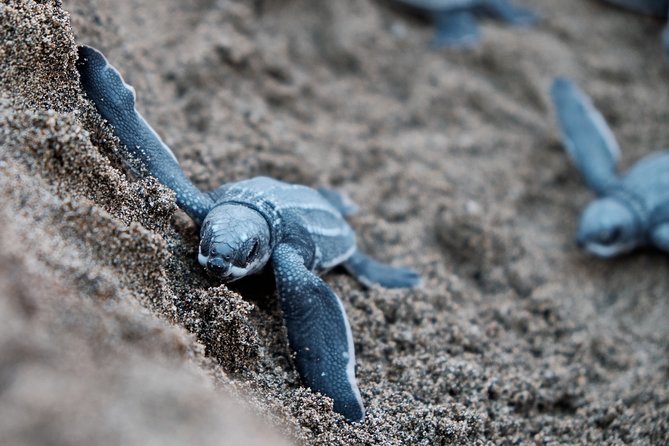
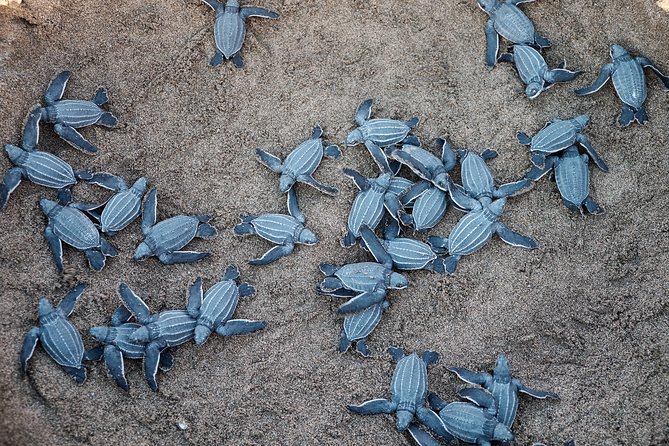
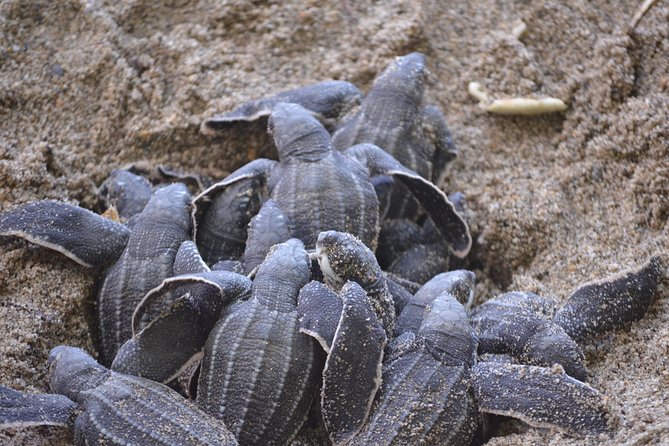
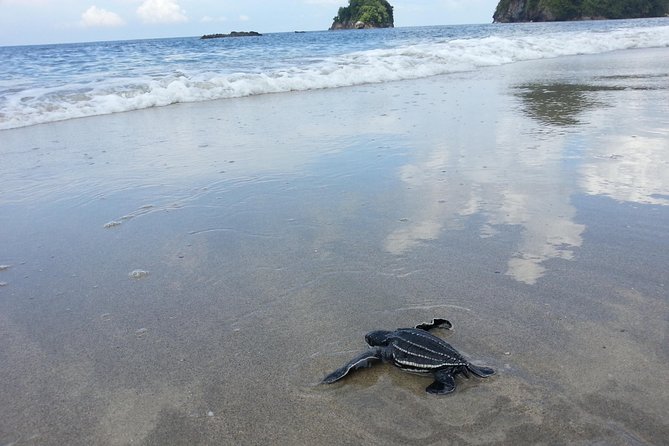
From May through August, there is also a chance of seeing baby turtles hatch and head toward the water. This is a different kind of sight from watching an adult nest.
An adult leatherback is massive and slow-moving. Hatchlings are tiny by comparison and face the difficult trip from the nest to the sea. Seeing them make that run can be memorable, but the wording matters: it is a chance, not a promise. Nesting and hatching do not happen on a fixed schedule for every visit.
If hatchlings are your priority, book during the May to August part of the season and ask about current activity. The supplied tour details do not provide a hatchling guarantee, exact dates, or a set viewing time. That uncertainty is normal for wildlife, but you should know it before committing $145.
The possibility of seeing both stages, an adult laying eggs and hatchlings returning to the ocean, gives the tour extra appeal late in the season. It also means you should not judge the experience only by how many animals appear. The outing is built around respectful observation of a protected natural cycle.
What the five-hour schedule feels like
The evening begins with pickup or a meeting arrangement around 5:30 to 6:00 p.m. You then drive through villages toward the northeast coast and reach Matura Beach at about 8:00 p.m.
At the beach, the local patrol group leads the walk and turtle watch. The visit lasts roughly two hours, although the exact time can depend on turtle activity and the evening’s conditions. You then return to the meeting point or selected hotel, completing an outing of about five hours.
This schedule makes the tour easy to fit into a Trinidad itinerary if you keep the rest of the day fairly open. It is less suitable if you have an early morning flight, a fixed dinner reservation, or little tolerance for a late return.
The provided dress guidance is smart casual, but practical comfort matters more for a beach at night. You should wear clothing suitable for an outdoor evening and walking on sand, while still respecting the stated dress code. The tour requires a moderate level of physical fitness, so do not treat it as a vehicle-only excursion.
The information does not specify how far you walk, the condition of the beach, or seating arrangements. If sand walking or standing for a period is difficult for you, ask the operator before booking. The same advice applies if you need special assistance, since no accessibility details are provided.
What is included for $145
The $145 price covers more than admission to a beach. Included items are:
- Driver and guide
- Bottled water
- Light refreshments
- Permits and entrance fee
- Hotel pickup and drop-off at selected hotels
Those inclusions help explain the cost. You are paying for a guided nighttime transfer to the eastern coast, local protection access, and the permits tied to a regulated turtle encounter. The small group cap of 10 also gives the tour a more personal scale than a large coach outing.
Still, value depends on your priorities. If you want a guaranteed attraction that runs on a strict timetable, the price may feel high. If you care about wildlife, local conservation, and a rare seasonal event, the package is easier to justify.
Food beyond the included light refreshments is not covered. The details do not specify the type or amount of refreshments, so eat beforehand if you need a full meal. Bottled water is provided, which is helpful, but you should not assume that every personal drink or snack is included.
The experience requires at least two people to book. That is worth noting for solo visitors. You may need to arrange another participant or confirm availability with Island Experiences before making plans.
The strengths and limits of a small-group night tour
The small group is one of the clearest strengths. Ten people is the maximum, and the actual group may be smaller. Fewer people usually make it easier to follow instructions and keep noise under control around nesting animals.
The local leadership adds another layer of value. Matura villagers patrol the beach during egg-laying season, so the tour supports a community role in conservation rather than separating visitors from the place and the people who protect it.
The main limit is that the experience depends on nature. You could see a spectacular leatherback, perhaps even hatchlings, but the tour cannot control when turtles come ashore or how clearly you see them. The published feedback includes a perfect five-star score from two ratings, with the strongest praise centered on the magic and uniqueness of seeing a huge turtle lay eggs. That is encouraging, but the small number of ratings means you should weigh the written details more heavily than the score alone.
Another consideration is the nighttime setting. You may enjoy the mystery of moonlit Matura Beach, or you may prefer a brighter, more predictable wildlife visit. This tour rewards curiosity and patience more than speed.
Who should book this experience
I would recommend the Matura Beach turtle tour to you if you have a strong interest in wildlife and want a seasonal experience rather than a standard sightseeing stop. It is especially suitable if you value local conservation work and like the idea of being guided by people who patrol the nesting beach.
It also fits visitors who are comfortable with a late evening, a long round-trip drive, and a moderate amount of walking or standing. The included transport is useful if you are staying at a participating hotel in or around Port of Spain.
Families may find the turtles fascinating, but the nighttime schedule and need for calm behavior may not suit very young children. The supplied details do not give an age minimum, so confirm that point with the provider if you are booking for children.
I would think twice if you need a fixed end time, dislike outdoor conditions, or would be disappointed without a guaranteed turtle sighting. The price is easier to defend when the wildlife encounter itself is your main reason for visiting Trinidad.
Booking, cancellation, and practical planning
Confirmation is provided at the time of booking, and free cancellation is available until at least 24 hours before the start time. Cancellations or changes made less than 24 hours before the experience are not accepted for a refund, with cut-off times based on local time.
Book ahead rather than leaving this until the last day. The experience is booked an average of eight days in advance, and the season is limited to March through August. A little planning also gives you time to confirm hotel pickup, the exact start time, and the meeting arrangement.
The experience provider is Island Experiences. Since the stated start point is Matura Beach but hotel pickup is offered only at selected hotels, check the exact transport details in your confirmation.
Should you book the Matura Beach turtle tour?
Book it if you want one of Trinidad’s most unusual seasonal wildlife encounters and you can accept that nature sets the timetable. The chance to watch a 1,500-pound leatherback lay eggs, guided by a local turtle protection group, is a strong reason to make the trip to Matura.
The $145 price is not casual sightseeing money, but permits, transport, refreshments, a small group, and local conservation guidance are included. Choose it for the experience itself, not for a guaranteed number of turtles or a polished evening show. If you do, the dark beach, the ancient animal, and the quiet work of the local patrol group may make this one of your most memorable nights in Trinidad.
FAQ
Where does the turtle-watching experience take place?
The experience takes place at Matura Beach on Trinidad’s eastern coast.
What months does the tour operate?
The turtle-watching season runs from March through August.
When is there a chance to see hatchlings?
There is a chance to see hatchlings from May through August.
What time does the experience start?
The stated start time is 5:30 p.m., while the departure from Port of Spain is listed as approximately 6:00 p.m. Confirm the exact time when booking.
How long does the experience last?
The complete experience lasts approximately five hours. The beach visit itself is about two hours.
Is hotel pickup included?
Hotel pickup and drop-off are included at selected hotels only. Confirm that your hotel is covered before booking.
How many people can join the tour?
The activity has a maximum of 10 participants and requires a minimum of two people to book.
What is included in the price?
The price includes bottled water, a driver and guide, selected-hotel transport, permits and entrance fees, and light refreshments.
Can I cancel for a full refund?
Yes. You can cancel at least 24 hours before the experience start time for a full refund. Changes or cancellations made less than 24 hours before the start time are not accepted for a refund.
Just added in Trinidad
- Trinidad: Pitch Lake and Chaguanas Sightseeing Tour★ 5.0 · 2 reviews
- Guided Day Tour at Lopinot Plantation Estate★ 5.0 · 3 reviews
- Trinidad and Tobago Flamingos, Scarlet Ibis Tour★ 5.0 · 1 review
- Trinidad True North Coast Excursion★ 5.0 · 3 reviews
- Private Steelpan Making Tour in Port of Spain★ 5.0 · 1 review
- Street Food Panyard Tour★ 4.5 · 2 reviews
- Rio Seco Waterfall Day Adventure★ 4.5 · 2 reviews
- Private Hike Tour to Paria Waterfall★ 5.0 · 2 reviews
Wildlife, compared.
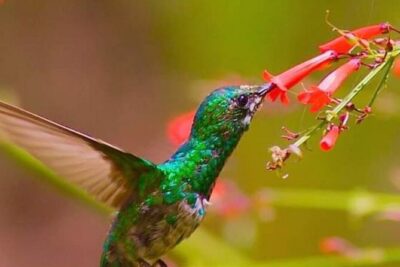
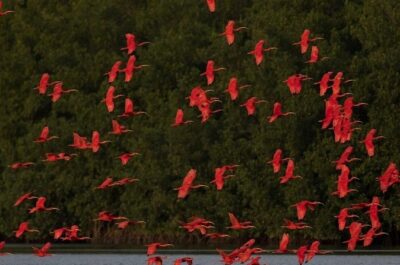

Yerette Home of the Hummingbird and Caroni Wildlife Tour
Read our review →Browse the lists this tour appears in