
Reviewed · TOURS
City Temple in the Sea Hanuman Murti Tour
Port of Spain opens the door to Trinidad. This five-hour outing links the capital’s grand buildings with the Chaguanas Market, the Hanuman Murti, the Ashram, and the Temple in the Sea. I like the mix of city sights and central-island culture, and I especially like that the day ends with a traditional East Indian meal. The main consideration is pace: several major stops, a market visit, religious sites, and lunch all share one half-day.
The tour costs $105.14 per person, with pickup offered and a mobile ticket. That price makes the most sense if you want transport, a guide, sightseeing, and food handled in one package. I would not choose it for a slow, in-depth museum day, since the schedule covers a lot of ground.
In This Review
- Key points at a glance
- Why this five-hour tour works
- Port of Spain and the Magnificent Seven
- Chaguanas Market and Bazaar Street
- Meeting the 85-foot Hanuman Murti
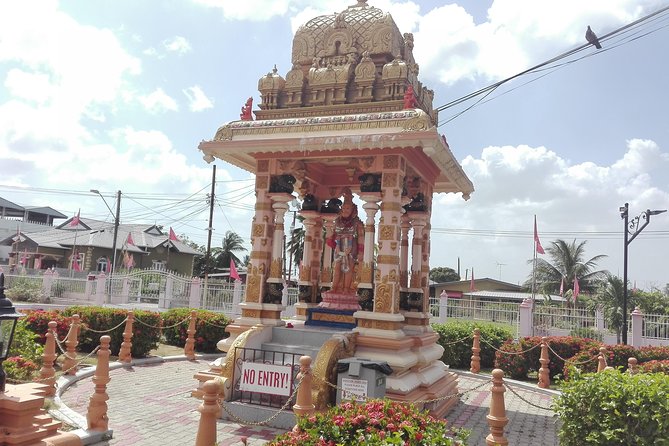
- The Ashram and Temple in the Sea
- A Trinidadian East Indian meal
- What the guide adds to the day
- Is $105.14 a fair price?
- Weather, cancellation, and practical planning
- Who should book this experience?
- Should you book it?
- FAQ
- What time does the tour start?
- How long does the experience last?
- Is pickup available?
- What is the minimum booking requirement?
- How many people can join the tour?
- What happens if I cancel?
Key points at a glance
- Port of Spain begins the day: See the Magnificent Seven around Queen’s Park Savannah, including Stollmeyer’s Castle, Whitehall, Queen’s Royal College, and the Archbishop’s House.
- Central Trinidad adds local flavor: Chaguanas Market and Bazaar Street give you time to see, buy, and taste fresh local fruit.
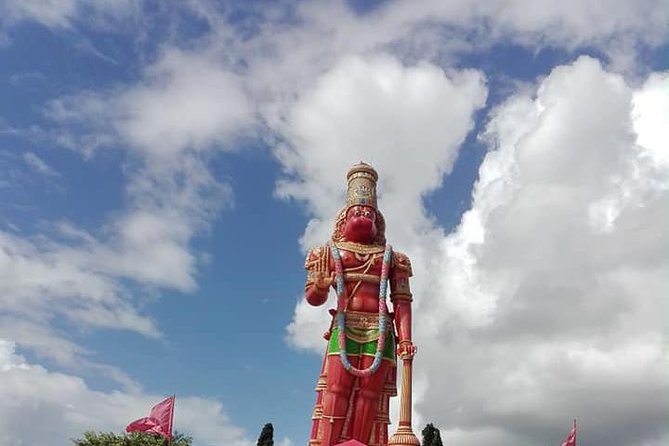
- The 85-foot Hanuman Murti is the visual centerpiece: This large Hindu statue offers a clear introduction to Trinidad and Tobago’s Indian cultural influence.
- The Temple in the Sea gives the tour its most unusual stop: The visit adds a strong story of faith and persistence to the day.
- Food is part of the experience: A traditional Trinidadian East Indian meal, including the roti praised in the tour feedback, rounds out the outing.
- Small-group limits help: The group is capped at 20 people, and at least two people are needed to operate the booking.
Why this five-hour tour works
I like this tour because it gives you a quick but broad introduction to Trinidad. You are not confined to Port of Spain, yet you also do not skip the capital’s grand civic and colonial-era architecture. The route moves from formal city sights to markets, Hindu landmarks, and food.
That range matters. Trinidad and Tobago is shaped by several cultural traditions, and this experience gives you a practical way to see that variety in one morning or afternoon. You begin with public buildings and historic homes, then move toward places tied to Hindu worship and Indo-Trinidadian life.
The timing is both its strength and its limit. Five hours is long enough to see several parts of the island without giving up an entire day. At the same time, you should expect a survey rather than a slow study. If you want long shopping time at the market or extended quiet time at the temples, you may find the schedule brisk.
The tour begins at 9:00 am. Pickup is offered, which can make a real difference in Port of Spain, especially if you would rather not arrange separate transport for a route that crosses into central Trinidad. The group can reach 20 people, so the feel may depend on the day. A smaller group should make stops and questions easier, while a full vehicle may feel less personal.
Other trips worth a look in Trinidad:
- Trinidad Nighttime Food Tour
★ 5.0 · 123 reviews - Trinidad Highlights and Scenic Drive Tour
★ 4.5 · 68 reviews - Trinidad Highlights Tour from Port of Spain
★ 4.5 · 61 reviews
Port of Spain and the Magnificent Seven
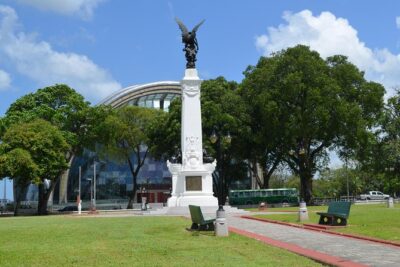
The city portion starts with Port of Spain and the area around Queen’s Park Savannah. This is a useful first stop because the buildings here help you read the city before moving farther afield.
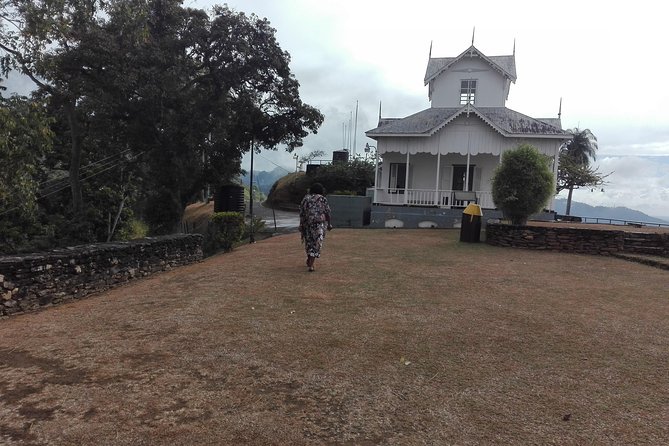
The group sees several of the buildings known as the Magnificent Seven. Stollmeyer’s Castle dates from 1904 and uses a German Romantic style. That detail gives the stop more weight than a simple photo opportunity. You can look at the building as evidence of the period’s taste for grand private homes and European design.
Queen’s Royal College is another landmark on the route. It serves as a secondary school for more than 1,200 students, so it is not simply a preserved shell from the past. The stop lets you see how a historic building remains tied to daily public life.
Whitehall brings a different design influence, with Venetian-style palazzi as its model. The Archbishop’s House adds another important piece to the group of buildings around the Savannah. Together, these stops show how Port of Spain’s central district carries several architectural influences in a compact area.
I would pay attention to the guide’s explanation here rather than treating the buildings as a parade of façades. The tour feedback gives special credit to the guide’s ability to explain the history of Trinidad and point out sights across the city. That is important because the value of this part depends on interpretation. Without context, you see attractive old buildings. With context, you begin to understand how the capital developed.
The city segment also includes the Royal Botanic Gardens. This gives the morning a change of pace after the architecture. You can expect time to see the gardens as part of the sightseeing route, though the supplied details do not promise a long independent visit. If gardens are a major reason for booking, keep your expectations measured.
Ariapita Avenue is also included in the city tour. The avenue is often referred to locally as The Avenue. Its inclusion shows that the tour is not limited to formal landmarks. You get a look at a well-known city corridor before leaving Port of Spain for the central-island portion.
Chaguanas Market and Bazaar Street
The move to Chaguanas changes the tone of the day. Here, the focus turns from large buildings to everyday commerce, fresh produce, and food.
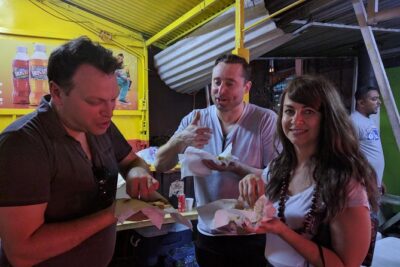
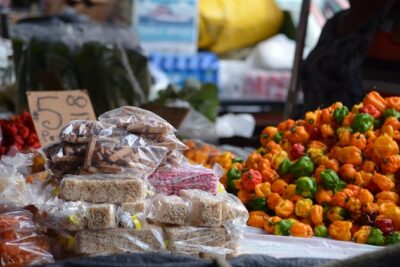
At Chaguanas Market and Bazaar Street, you can purchase and taste local fruit. That hands-on element is one of the better reasons to choose this tour over a standard city drive. You are not only being shown a market from a vehicle window. You have a chance to stop, look around, and sample some of what is being sold.
The market visit also gives you a better sense of central Trinidad than another round of monuments would. Fruit, stalls, and street activity put local routines in front of you. I would bring a little spending money if you want to buy something, since the tour specifically includes the chance to make purchases.
Do not expect the market to behave like a carefully arranged attraction. It is a working commercial area, and that is the point. Conditions may feel busy or informal, and the amount of time available can affect how much you see. Since the entire experience lasts about five hours, you may need to choose between browsing, tasting, and shopping rather than doing all three at length.
The market is also a good place to ask the guide questions about local produce and food. The tour feedback repeatedly praises the guide’s manner and ability to explain the area. One review specifically notes that the guide kept the tour on track even with rain coming and going, stopping at the planned sights along the way.
Meeting the 85-foot Hanuman Murti
The Hanuman Murti is one of the most memorable visual stops. The statue is 85 feet tall and represents Hanuman, a Hindu god. Its scale gives the tour a clear landmark moment, but the importance goes beyond size.
For visitors unfamiliar with Trinidad and Tobago’s Hindu traditions, the statue provides an accessible introduction to the country’s religious variety. You do not need specialist background to understand why a large religious figure can carry such weight in the local setting. The guide can connect the site to the wider cultural picture that began in the city and market.
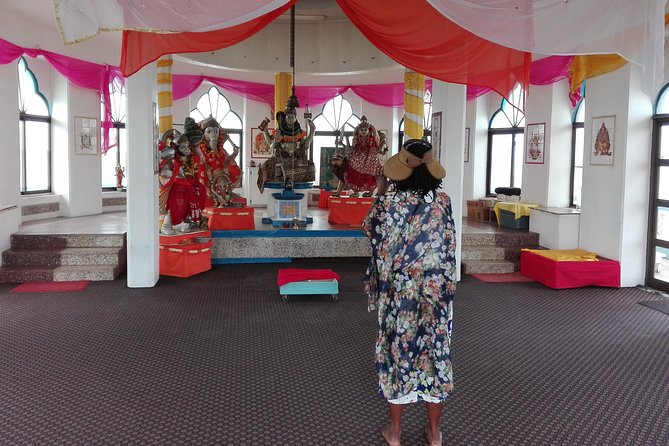
This is also a stop where respectful behavior matters. Treat the site as a religious place, not only as a backdrop for photographs. The supplied details do not specify a dress code, ceremony schedule, or whether interior access is included, so I would avoid assuming that you will see a particular ritual or spend a set amount of time inside.
The statue makes a strong contrast with the Magnificent Seven. Early in the tour, you see architecture shaped by European styles and colonial-era civic life. Later, you encounter a large expression of Hindu faith. That shift is the heart of the experience. It shows Trinidad through more than one cultural lens.
A completely different kind of day out:
- Mini Island Tour of Trinidad
★ 4.5 · 47 reviews - Sunset Boat Tour into Caroni Wetlands
★ 4.5 · 45 reviews - Avocat Waterfall Tour & Beach Stop Adventure
★ 5.0 · 41 reviews - Trinidad Island Circle Tour with Pickup
★ 4.5 · 39 reviews
The Ashram and Temple in the Sea
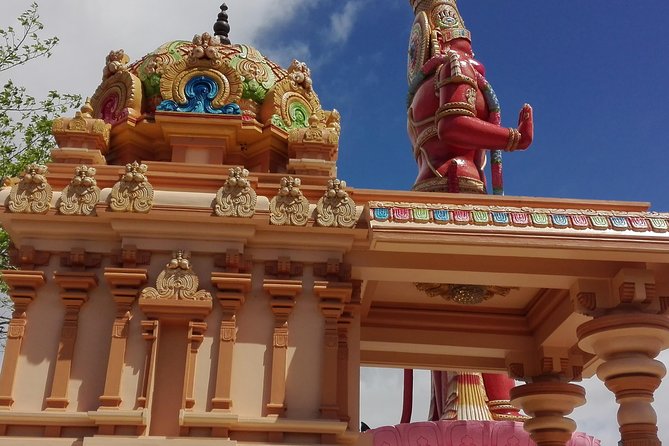
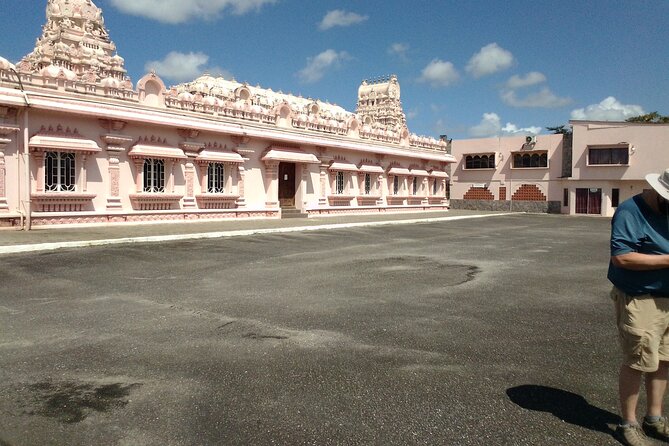
The Ashram continues the religious and cultural section of the tour. Along with the Hanuman Murti and Temple in the Sea, it helps explain why this outing is more than a city sightseeing loop.
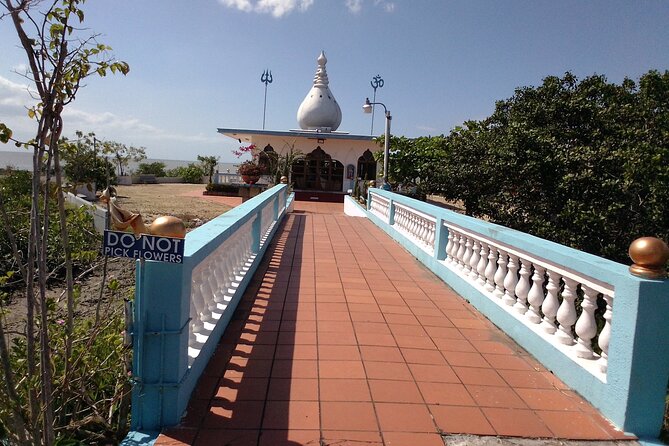
The Temple in the Sea is the most distinctive name on the route. Even before you arrive, it suggests the unusual setting that makes the site memorable. The provided details do not give a full account of the temple’s construction or exact position, so I would rely on the guide for the local story rather than arriving with fixed expectations.
What I can say with confidence is that the temple adds a strong sense of place to the day. You have already seen a capital city, a market, and a major statue. This stop gives the religious portion a quieter and more reflective finish.
The Ashram and temple may be especially worthwhile if you want to understand how Indian traditions form part of Trinidad’s identity. They also make the tour useful for first-time visitors who might otherwise see only the capital and miss central Trinidad altogether.
As with the Hanuman Murti, your time at these sites may be limited by the five-hour schedule. If you prefer to linger, take detailed photographs, or read every sign, a private or longer tour may suit you better. This experience is designed to connect several places, not to give one temple a full morning.
A Trinidadian East Indian meal
Food is not an afterthought here. Before returning to your hotel, you receive a traditional Trinidadian East Indian meal. That makes sense after the market and religious sites, since the meal continues the cultural thread rather than switching to a generic restaurant stop.
One review specifically praises the roti included during the outing. Roti is a useful example of how Trinidad’s food reflects its Indian heritage while belonging fully to the country’s own culinary life. The supplied details do not name the restaurant or specify the full menu, so you should not assume a particular dish beyond the mention of a traditional East Indian meal and roti.
I like the meal’s place in the schedule. Eating after the main sightseeing gives you time to process what you have seen, and food often explains cultural connections better than a short speech can. You also avoid having to arrange lunch separately, which adds value to the all-in price.
If you have strict dietary needs, check with the provider before booking. The available information does not list vegetarian, vegan, allergy, or other menu arrangements. The same applies to portion size and drink inclusions, which are not specified.
What the guide adds to the day
The guide can make or break a route with this many stops. The strongest feedback praises the guide for being polite, informative, and able to explain Trinidad’s history. It also notes that the guide continued to stop at sights despite intermittent rain.
That point matters more than it may first appear. A five-hour route needs someone who can manage time without making the day feel like a race. The guide’s job is to explain the Magnificent Seven, frame the cultural sites, point out city areas, and keep the group moving toward the meal and hotel return.
No guide name is provided, so I cannot tell you who will lead your specific departure. I would ask questions during the city section, where the architectural details can pass quickly. It is also worth asking for guidance at the religious sites, especially if you are unsure about photography or appropriate behavior.
The experience has a maximum group size of 20. That is not a private tour, but it is smaller than a large coach excursion. If you want a very personal conversation with the guide, the actual group size will matter. If you are comfortable with a shared outing, the cap should keep the experience manageable.
Is $105.14 a fair price?
At $105.14 per person, this is not the cheapest way to see one attraction. It becomes easier to justify when you count the range of services and stops: pickup is offered, transport connects Port of Spain with central Trinidad, the tour lasts about five hours, the guide provides context, fruit tasting and purchases are part of the market visit, and a traditional East Indian meal is included.
The price is strongest for you if you want a ready-made introduction. You do not need to plan a route between the capital, Chaguanas, the Hanuman Murti, the Ashram, and the Temple in the Sea. You also get a meal rather than ending the tour with one more decision to make.
The value is weaker if you already have transport, know Port of Spain well, or mainly want to spend time at one religious site. In that case, the group format and fixed schedule may give you less control than a private arrangement.
The average booking point is 59 days ahead. That suggests planning early can be sensible, especially if your dates are fixed. The tour requires at least two people and accepts a maximum of 20, so availability may affect your plans.
Weather, cancellation, and practical planning
The experience requires good weather. If poor weather causes cancellation, you are offered another date or a full refund. The same applies if the minimum number of participants is not reached.
You can cancel for a full refund up to 24 hours before the 9:00 am start time. Cancellations or changes inside that 24-hour window are not refunded or accepted. The cut-off uses local time, so check the clock carefully if you are arranging the tour from another time zone.
Rain can occur, and the feedback shows that the tour may continue through rain when conditions allow. I would still bring light rain protection and shoes suitable for walking around markets and outdoor sites. That is practical advice, not a promise that equipment is supplied.
A mobile ticket is offered, and confirmation arrives when you book. Most people can participate, but the supplied details do not give a more specific accessibility description. If you have mobility concerns, ask the provider about the exact pickup point, walking distances, and surfaces before paying.
Who should book this experience?
I would recommend this tour to a first-time visitor who wants a broad introduction to Trinidad in half a day. It suits you especially well if you enjoy architecture, local markets, religious landmarks, and food in equal measure.
It is also a good fit if you want to see beyond Port of Spain without arranging several separate trips. The route gives you a practical look at central Trinidad and includes cultural sites that are easy to miss when you focus only on the capital.
Families and mixed-interest groups may find the variety useful. One person can focus on the buildings, another on the market, another on the statue and temple, and everyone gets a meal. The 20-person limit keeps it from being an enormous outing, though you should not expect a private guide.
I would hesitate if your priority is a slow, specialized visit. Temple architecture, botany, shopping, and food each receive only part of the five-hour schedule. You may also want another option if your group has strict food requirements or needs detailed accessibility arrangements that are not described here.
Should you book it?
Book this experience if you want variety without complicated planning. Its best features are the clear contrast between Port of Spain’s grand buildings and central Trinidad’s markets and Hindu sites, plus the East Indian meal and roti stop.
Skip it if you prefer to set your own pace or spend a full day at one attraction. For most first-time visitors, though, the combination of city history, local fruit, the 85-foot Hanuman Murti, the Ashram, the Temple in the Sea, and a traditional meal gives the $105.14 price a fair case.
FAQ
What time does the tour start?
The tour starts at 9:00 am.
How long does the experience last?
It lasts approximately five hours.
Is pickup available?
Yes, pickup is offered.
What is the minimum booking requirement?
A minimum of two people is required for the tour to operate.
How many people can join the tour?
The maximum group size is 20 people.
What happens if I cancel?
You receive a full refund if you cancel at least 24 hours before the start time. Cancellations or changes made less than 24 hours before the experience are not refunded or accepted.
Just added in Trinidad
- Guided Day Tour at Lopinot Plantation Estate★ 5.0 · 3 reviews
- Trinidad: Pitch Lake and Chaguanas Sightseeing Tour★ 5.0 · 2 reviews
- Trinidad and Tobago Flamingos, Scarlet Ibis Tour★ 5.0 · 1 review
- Trinidad True North Coast Excursion★ 5.0 · 3 reviews
- Private Steelpan Making Tour in Port of Spain★ 5.0 · 1 review
- Matura Beach Turtle-Watching Experience★ 5.0 · 2 reviews
- Street Food Panyard Tour★ 4.5 · 2 reviews
- South Tour (Package) to Trinidad Pitch Lake & Datatria Temple★ 3.0 · 2 reviews
Tours, compared.
Birdwatching, Waterfall, Rainforest and Island Nature Tours
Read our review →

Browse the lists this tour appears in